


Customer Testimonials
What is liquid fertilizer? How is it used?

In recent years, with the increasing advantages of liquid fertilizers and the strong advocacy of the state, more and more large-scale planting households have chosen to use liquid fertilizers. So what is liquid fertilizer? What is its usage method? Let's take a look below.
I. What is liquid fertilizer?
Liquid fertilizer is a liquid fertilizer, which is to directly spray organic fertilizer or chemical fertilizer mixed with water on the plant leaves or roots, so that it can be absorbed more quickly.
Liquid fertilizer has the function of regulating plant physiological functions, promoting development, and early maturation. It can effectively supplement various micronutrient deficiencies in crops and ensure normal crop development.
Liquid fertilizer contains a variety of plant vitality factors, which effectively inhibit soil compaction caused by chemical fertilizers, improve field geology, cultivate land strength, activate soil, promote the development of underground root systems, stimulate self-pollination and cross-pollination, improve fruit setting rate, and ensure maturity and yield.
II. How to use liquid fertilizer?
Because plants and fertilizers are in direct contact, it is easy to cause fertilizer damage. Therefore, whether it is solid fertilizer or already soaked liquid fertilizer, the mixing ratio with water must be very careful and should not be careless.
Liquid fertilizer is not ordinary foliar fertilizer; it is only named based on its existence. Many foliar fertilizers on the market are not liquid fertilizers as defined by developed countries. Liquid fertilizers in developed agricultural countries have been popularized to about 40%, while China has just started. Liquid fertilizer is the liquidization of solid fertilizer. It conforms to the national guidance for development trends: that is, ultra-concentration, liquidization, which is conducive to absorption and reduces transportation costs, such as American liquid fertilizer. It has opened a new chapter for liquid fertilizer in China.
III. Precautions for using organic liquid fertilizer
1. Pay attention to soil characteristics
The effect of fertilization is affected by the physical and chemical properties of the soil. When there are adverse limiting factors in the soil, they should be eliminated first to improve fertilizer efficiency; for example, when the soil alkalinity is high, the ammonium nitrogen fertilizer applied is easily volatilized and lost; acidic soil has a strong ability to fix phosphorus fertilizer, and the applied phosphorus is easily fixed; Also, in coarse-textured soils, such as sandy soils, the fertilizer loss is greater.
2. Pay attention to the dilution ratio
When the concentration of the liquid mother liquor is very high, applying it directly to crops will cause damage. It generally needs to be diluted. The concentration of spraying leaves and the whole plant must be noted.
3. Pay attention to the maturity of organic materials
Liquid organic materials cannot contain a large amount of decomposable carbon sources; otherwise, application is prone to soil eutrophication, producing a large number of microbial proliferations, resulting in problems such as obstacles to crop growth.
4. Pay attention to the balance of fertilization
Fertilizer application should pay attention to nutrient balance and should not excessively apply single liquid fertilizers, especially those containing excessive nitrogen, which has an adverse effect on some crops. Pay attention to the content of major nutrient elements and the content of secondary components.
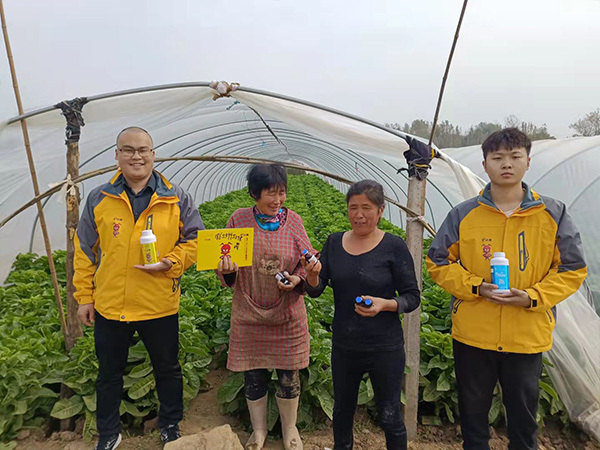
Witness of relevant farmers


CONTACT INFORMATION
OFFICIAL ACCOUNTS
ONLINE MESSAGE
Please leave your personal information and we will contact you as soon as possible!