


Customer Testimonials
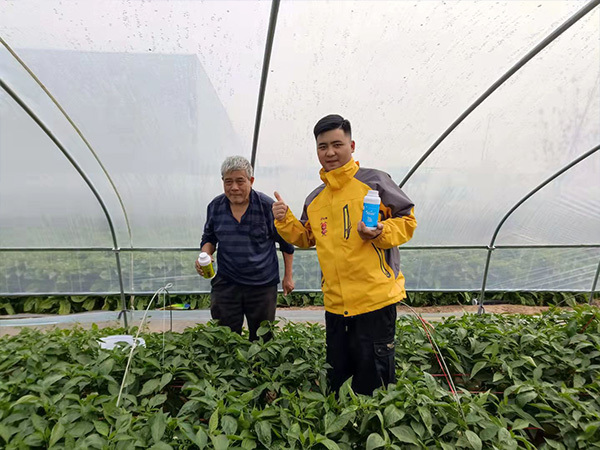
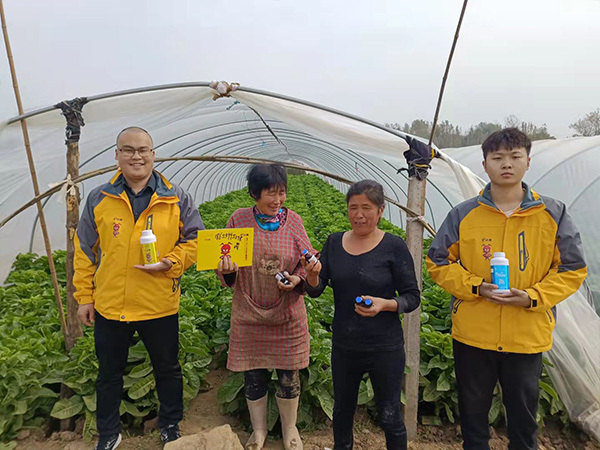
Farmers' Testimonies

Organic fertilizers are fertilizers made from raw materials rich in organic matter, such as animal excrement or plant and animal residues, after fermentation and composting. Organic fertilizers have the characteristics of improving soil, enriching soil fertility, improving soil nutrient activity, purifying soil ecological environment, and ensuring high-quality and high-yield vegetables, and are irreplaceable fertilizers for protected vegetable cultivation. Commonly used organic fertilizers in protected vegetable cultivation mainly include commercial organic fertilizers and farmyard manure.
With the increasing modernization of agriculture, organic food has received more and more attention from people. Along with this attention is ecological agriculture. Because only ecological agriculture can produce ecological food. In this respect, the country has invested a lot of support, both in terms of the strength of national policy support and in practical actions. The widespread application of organic fertilizers that we understand is the best illustration. It can be said that organic fertilizers will gradually replace other fertilizers and become an essential fertilizer in crop growth.
In the production of organic fertilizers, many experts have given strong support. At the same time, in terms of equipment, it has also received strong support from the state. Many places now have special equipment and production lines for organic fertilizer production to produce better organic fertilizers. In terms of policy support, many local governments have provided a lot of help. Especially in the utilization of waste and the processing of discarded daily necessities, strong support has been given, because this not only disposes of household waste and reduces environmental pollution, but also turns waste into treasure, producing valuable organic fertilizers. In many places, this is a very good measure, so many local governments will strongly support the production and use of organic fertilizers, and even provide some economic subsidies to encourage people to use organic fertilizers.
It can be said that it is the widespread use of organic fertilizers that has enabled our agriculture to gradually shift towards pollution-free agriculture and has enabled more organic food, fruits and vegetables to reach our tables.
With the development of the economy and the acceleration of urbanization, the urban population has surged, and urban pollutants have also been increasing. In fact, urban pollutants can be turned into organic fertilizers through processing. Organic fertilizer is essential for organic agriculture and ecological agriculture. It can improve soil properties, increase soil fertility, increase the yield and quality of agricultural products, and curb environmental pollution. It is recommended that the government increase investment and plan the classification and treatment of urban pollutants in urban construction planning, and develop this as a new industry, turning urban pollutants into inexpensive and easily transportable organic fertilizers, turning waste into treasure and serving agriculture.
Organic fertilizers contain abundant organic matter and various nutrient elements, with the advantages of large quantity, wide sources, and comprehensive nutrients, but they also have disadvantages such as being dirty, smelly, unhygienic, low nutrient content, slow fertilizer effect, and inconvenient use. Inorganic fertilizers are just the opposite, with the advantages of high nutrient content, fast fertilizer effect, and convenient use, but also the disadvantage of single nutrients. Therefore, the application of organic fertilizers usually needs to be combined with chemical fertilizers in order to fully exert their effectiveness. The combined application of organic and chemical fertilizers can complement each other and alleviate urgency. The original functions of organic fertilizers, such as improving soil, enriching soil fertility, increasing yield, and improving quality, are further enhanced after being combined with chemical fertilizers. Since the use of chemical fertilizers in agricultural production, the combined application of organic and chemical fertilizers has already objectively existed, but at that time it was still blindly combined and not perfect. Since the 1970s, China's chemical fertilizer development has been rapid. Through the research of many scientific workers and the practice of a large number of farmers, soil testing and fertilization, formula fertilization and other fertilization methods have been successively promoted in production, making the combined application of organic and inorganic fertilizers more perfect.
Improving Soil and Enriching Soil Fertility
The main substance in organic fertilizers is organic matter. The application of organic fertilizers increases the organic matter content in the soil. Organic matter can improve the physical, chemical, and biological properties of the soil, mature the soil, and enrich soil fertility. The Chinese rural proverb “the land depends on manure to support it, and the seedlings depend on manure to grow” reflects, to some extent, the role of organic fertilizer application in soil improvement. The application of organic fertilizers increases many organic colloids, and with the help of microorganisms, many organic substances are decomposed and transformed into organic colloids, which greatly increases the soil adsorption surface and produces many adhesive substances, making soil particles agglomerate into stable granular structures, improving the soil’s water retention, fertilizer retention, and air permeability, as well as its ability to regulate soil temperature.
With the single application of 3500~7000 kg of organic fertilizer, after 9 years, the soil organic carbon increased by 0.04%~0.16%, the bulk density decreased by 0.04~0.06 g/cm3, the total porosity increased by 1.5%~2.3%, the capillary porosity increased by 3.45%~4.05%, and the field water holding capacity increased by 1.13%~1.31%. With the combined application of 9.2~18.4 kg of urea, the above indicators were significantly higher than those of single application of organic fertilizer. The organic carbon increased by 0.09%~0.19% compared with the control, the bulk density decreased by 0.03~0.1 g/cm3, the total porosity increased by 1.1%~3.8%, the capillary porosity increased by 3.45%~5.0%, and the field water holding capacity increased by 2.49%~4.24%.
The results of a 9-year experiment on the application of organic fertilizer and the combined application of organic and inorganic fertilizers conducted by the Institute of Soil and Fertilizer, Chinese Academy of Agricultural Sciences, and Laiyang Agricultural College in Laiyang, Shandong Province, show that the application of organic fertilizer plays a very important role in the balance of phosphorus and potassium nutrients in the soil.
Note: CK-No fertilizer control; N1-Application of 9.2 kg N/mu; N2-18.4 kg N/mu; M1-3500 kg/mu organic fertilizer (pure N 9.2 kg); M2-7000 kg/mu organic fertilizer (pure N 18.4 kg); M1N1, M1N2, M2N1, M2N2- Treatments with different amounts of organic fertilizer and inorganic nitrogen fertilizer combined.
In treatments with single application of nitrogen fertilizer, single application of low amounts of organic fertilizer, or combined application of low amounts of organic fertilizer and nitrogen fertilizer, phosphorus in the soil was deficient. The former was more deficient than the latter. Only in treatments with high amounts of organic fertilizer, and combined application of high amounts of organic fertilizer and chemical fertilizer, did the soil have a surplus of phosphorus. Similar to the changes in soil phosphorus, comparing the average soil available potassium content of each treatment over 9 years with the control, the single nitrogen fertilizer treatment showed almost no difference from the control, the single application of low amounts of organic fertilizer and the combined application of low amounts of organic fertilizer and nitrogen fertilizer increased available potassium by 6~7 mg/kg, and the application of high amounts of organic fertilizer and combined application of nitrogen fertilizer increased available potassium by 11 mg/kg. This shows that the application of organic fertilizer is very important for the balance of phosphorus and potassium in the soil. In China’s chemical fertilizer production, the ratio of nitrogen, phosphorus, and potassium is unbalanced, with nearly 300 million mu of cultivated land lacking potassium and 1 billion mu lacking phosphorus.
The application of organic fertilizers can also lead to the proliferation of soil microorganisms, especially many beneficial microorganisms such as nitrogen-fixing bacteria, ammonifying bacteria, cellulose-decomposing bacteria, and nitrifying bacteria. Organic fertilizers contain various active enzymes secreted from the animal digestive tract, as well as various enzymes produced by microorganisms. When these substances are applied to the soil, they can significantly increase the enzymatic activity of the soil. Applying more organic fertilizers can improve soil activity and the ability of biological reproduction and transformation, thereby enhancing the soil's absorption, buffering, and resistance capabilities.
Role in increasing crop yield and improving agricultural product quality
Organic fertilizers contain a large number of nutrients needed by plants, various trace elements, sugars, and fats. Analysis shows that pig manure contains 2.91% total nitrogen, 1.33% total phosphorus, 1.0% total potassium, and 77% organic matter. Livestock and poultry manure contains 21.7-24 mg/kg boron, 29-290 mg/kg zinc, 143-261 mg/kg manganese, 3.0-4.2 mg/kg molybdenum, and 29-290 mg/kg available iron. Long-term field experiments conducted by the Soil and Fertilizer Institute of the Chinese Academy of Agricultural Sciences and Laiyang Agricultural College in Shandong province, with yield statistics for 18 crop seasons over 9 years (Table 3-3). Table 3-3 shows that applying nitrogen fertilizer alone (N1 and N2), applying organic fertilizer alone (M1 and M2), and the combined application of organic and inorganic fertilizers (M1N1, M1N2, M2N1, M2N2) can all effectively increase the yield of wheat and corn, and the yield increases with the increase in fertilizer application. Among them, the combined application of organic and inorganic fertilizers resulted in significantly higher crop yields than applying chemical fertilizers or organic fertilizers alone. With single organic fertilizer application, the average annual yield over 9 years increased by 54.7% to 107.7% compared to the control group, while the combined application of organic and inorganic fertilizers resulted in a 9-year average yield increase of 130.8% to 153.3% compared to the control group. This indicates that the combined application of organic and inorganic fertilizers is an important way to achieve high and stable yields. In terms of nitrogen, the ratio of organic nitrogen to inorganic nitrogen is preferably 1:1 to 2:1.
Research by Wang Xiaoping and others at the Soil and Fertilizer Institute of the Chinese Academy of Agricultural Sciences on the effect of organic fertilizer in reducing the toxicity of heavy metal pollution showed that when the chromium content in the soil is 10 mg/kg, it has little effect on the emergence of Chinese cabbage, but it has a great impact on the growth and development of Chinese cabbage, even leading to seedling death. The lowest yield was observed in the group without organic fertilizer application, at 155 g/pot; applying a small amount of any type of organic fertilizer (chicken manure, horse manure, sheep manure, pig manure) significantly reduced or even eliminated the toxicity symptoms in Chinese cabbage, with the highest yields obtained with 5% pig manure and 2.5% chicken manure, at 2180 g/pot and 2590 g/pot, respectively. The determination of the change patterns of different chromium concentrations in the soil showed that in the pure chemical fertilizer treatment, the chromium content in the soil water remained high; after the addition of pig manure, the initial soil chromium content was 50 mg/kg, which decreased to 2-3 mg/kg after 8 days. In the group without organic fertilizer application, the chromium content in Chinese cabbage was as high as 29.7 mg/kg; with the addition of organic fertilizer, the chromium content in Chinese cabbage decreased sharply to the normal chromium content of 0.1-0.3 mg/kg. This clearly shows that the application of organic fertilizer can effectively reduce the toxicity of chromium-contaminated soil to crops. Similar results were obtained when corn was planted in chromium-contaminated soil.
Organic fertilizers are the main source of fertilizers for producing green food
The production of pollution-free, safe and high-quality green food was first welcomed in countries with higher living standards such as Western Europe and the United States. Although the Price of green food is 50%-200% higher than that of ordinary food, it is still popular. In the past decade, the living standards of the Chinese people have rapidly improved, and the demand for green food has increased day by day. Coupled with the advocacy and emphasis of government departments, the production and development of green food in China has been rapid.
The "Basic Standards for Organic Agriculture and Food Processing" (IFOAM) includes regulations on fertilizer use. The key points are to "promote natural systems and biological recycling, returning sufficient amounts of organic matter to the soil to maintain and increase soil organic matter, soil fertility, and soil biological activity"; "inorganic fertilizers are only considered as supplements to nutrient cycling, not substitutes"; and "the use of chemically synthesized fertilizers and chemically synthesized growth regulators must be limited to avoid adverse consequences for the environment and crop quality, and to prevent the accumulation of toxic substances in crop products to levels that affect human health. These regulations indicate that in the production of green food, it is necessary to pay close attention to protecting a good ecological environment and to limit the excessive use of inorganic fertilizers. Organic fertilizers (including green manure and microbial fertilizers) are the main source of fertilizers for the production of green food.
The advantages and problems of applying organic fertilizers have been discussed above. To ensure that there is a sufficient quantity of organic fertilizers that meet the requirements for the production of green food, the following aspects must be addressed.
① To ensure sufficient sources of organic fertilizers, existing organic fertilizer resources must first be utilized effectively, and large quantities of farm manure must be produced. In particular, the phenomenon of discarding livestock and poultry manure, drying manure, and burning straw everywhere must be stopped.
② The collection of organic fertilizer materials mainly includes human and animal excrement, oil cakes, food processing waste, straw, peat, mountain vegetation, and lake grasses.
③ There are various methods for processing organic fertilizers, and various types of organic fertilizers produced must meet the following standards.
A. The composting maturity must meet the comprehensive indicators of compost maturity identification. That is, for mature compost, the volume of the compost heap has collapsed by 1/3 to 1/2 compared to when it was first piled up, the straw in the compost has turned dark brown, there is an ammonia odor, the straw is soft when wet and easily broken when dry. The color of the compost leachate is yellowish-brown, the carbon-nitrogen ratio is 20-30:1, and the humification coefficient is around 30%.
B. All types of organic fertilizers must meet the harmlessness and hygiene indicators for manure.
1. Maximum composting temperature: Above 50-55℃, lasting for 5-7 days.
2. Ascaris egg mortality rate: 95%-100%
3. Coliform group value: 10-1~10-2
4. Flies: Effectively control the breeding of flies, with no live maggots, pupae, or newly hatched adult flies around the compost heap.
Cited from "Sanitary Inspection Method of Compost and Manure" 1976
1. Sealed storage period: More than 30 days
2. Fermentation temperature: 53℃±2℃ for 2 days
3. Parasite egg sedimentation rate: More than 95%
4. Schistosoma and hookworm eggs No live schistosoma and hookworm eggs should be detected in the fecal liquid.
5. Fecal coliform value Ordinary biogas fermentation is greater than 10-4, high-temperature biogas fermentation is 10-1~10-2.
6. Mosquitoes and flies Effectively control the breeding of mosquitoes and flies, no wrigglers in the fecal liquid, no live maggots or newly hatched adult flies around the pond.
7. Biogas digester sludge Must be treated harmlessly before being used as organic fertilizer.
Cited from "Sanitary Inspection Method of Compost and Manure" 1976
4. Compost needs to pass through a 12mm sieve to remove large pieces of bricks and rubble. Impurities in compost products (including plastics, glass, metals, rubber, etc.) shall not exceed 3%. Control the pH value at 6.5~8.5, and the moisture content at 25%~35%.
⑤ Organic fertilizers are generally used as base fertilizers. 各地可根据不同土壤肥力,不同作物,不同的肥料质量来确定施肥量。目中国农村的有机肥用量在304吨/亩。饼肥对提高西瓜、烟草、水果、蔬菜的品质有很好的作用。生产绿色食品可适当多用饼肥。腐熟的,达到无害化要求的沼气肥水,人畜粪尿可作追肥,严禁在蔬菜等作物上浇不腐熟的人粪尿。
⑥ The raw materials for making farm manure are all natural products, with very low levels of harmful heavy metals, making it unlikely to cause heavy metal harm. The key is to prevent materials containing heavy metals from being mixed in when collecting organic fertilizer materials.
⑦ Based on local natural conditions and planting systems, select suitable green manure varieties, vigorously develop green manure, and use green manure rationally and scientifically.
⑧ Develop ecological agriculture and create a good ecological environment.
Following ecological laws and creating a good ecological environment are essential conditions for producing green food. Ecological agriculture has the characteristics of comprehensive operation and multiple use of agricultural resources, which can avoid and even eliminate vicious cycles, eliminate pollution, promote benign cycles, and achieve good economic, environmental, and social benefits. Organic matter circulation runs through the entire ecological agriculture.
⑨ It is necessary to apply chemical fertilizers rationally. Applying chemical fertilizers can effectively increase crop yields. However, improper use can easily pollute the environment. The ratio of nitrogen, phosphorus, and potassium fertilizers produced in China is seriously out of balance. The utilization rate of chemical nitrogen fertilizer is only about 30%, and about 70% of nitrogen is lost through surface runoff and other pathways. The utilization of chemical phosphorus and potassium fertilizers is also only about 35%. Therefore, the pollution of chemical fertilizers to the environment is quite serious. This is reflected in the enrichment of nitrogen and phosphorus nutrients in surface water, exceeding the standard of nitrates in groundwater and food. To prevent fertilizer pollution while ensuring high crop yields, the key lies in significantly increasing the amount of organic fertilizer used, rationally controlling the amount of chemical fertilizer used, adjusting the proportion of nitrogen, phosphorus, and potassium fertilizers, and implementing measures such as deep application of chemical fertilizers.
Issues to Note When Applying Organic Fertilizers
1. First, it's important to understand that while organic fertilizers are very effective, they are not a panacea. The nutrients contained in organic fertilizers are not balanced and cannot meet the needs of high-yield and high-quality crops. Therefore, when applying organic fertilizers, chemical fertilizers can be applied as required, and various foliar fertilizers can be applied during the crop growing period.
2. Compared with other fertilizers, organic fertilizers decompose relatively slowly and have a slower fertilizer effect. Although its nutrient element content is comprehensive, the content is relatively low, and it decomposes slowly in the soil. Therefore, experts suggest that organic fertilizer and chemical fertilizer be used in combination to complement each other's strengths and weaknesses.
3. Generally speaking, before using organic fertilizers, it is best to ferment them. Because many organic fertilizers carry bacteria, insect eggs, and weed seeds, which are not conducive to the healthy growth of crops, they must be processed before use.
4. The last point is the precautions for the use of organic fertilizers. Fermented organic fertilizers should not be mixed with alkaline fertilizers. If mixed with alkaline fertilizers, ammonia will volatilize, reducing the nutrient content of organic fertilizers and leading to nutrient imbalance. At the same time, bio-organic fertilizers contain a large amount of organic matter and should not be mixed with nitrate ammonium fertilizers.
Witness of relevant farmers

CONTACT INFORMATION
OFFICIAL ACCOUNTS
ONLINE MESSAGE
Please leave your personal information and we will contact you as soon as possible!